What is corrugated board?
A basic guide to the structure and types of corrugated board and why it is so widely used in packaging.
Most of the products we come across in daily life are transported in corrugated packaging. Its strength, light weight and recyclability make it one of the most widely used packaging materials.
What is corrugated board?
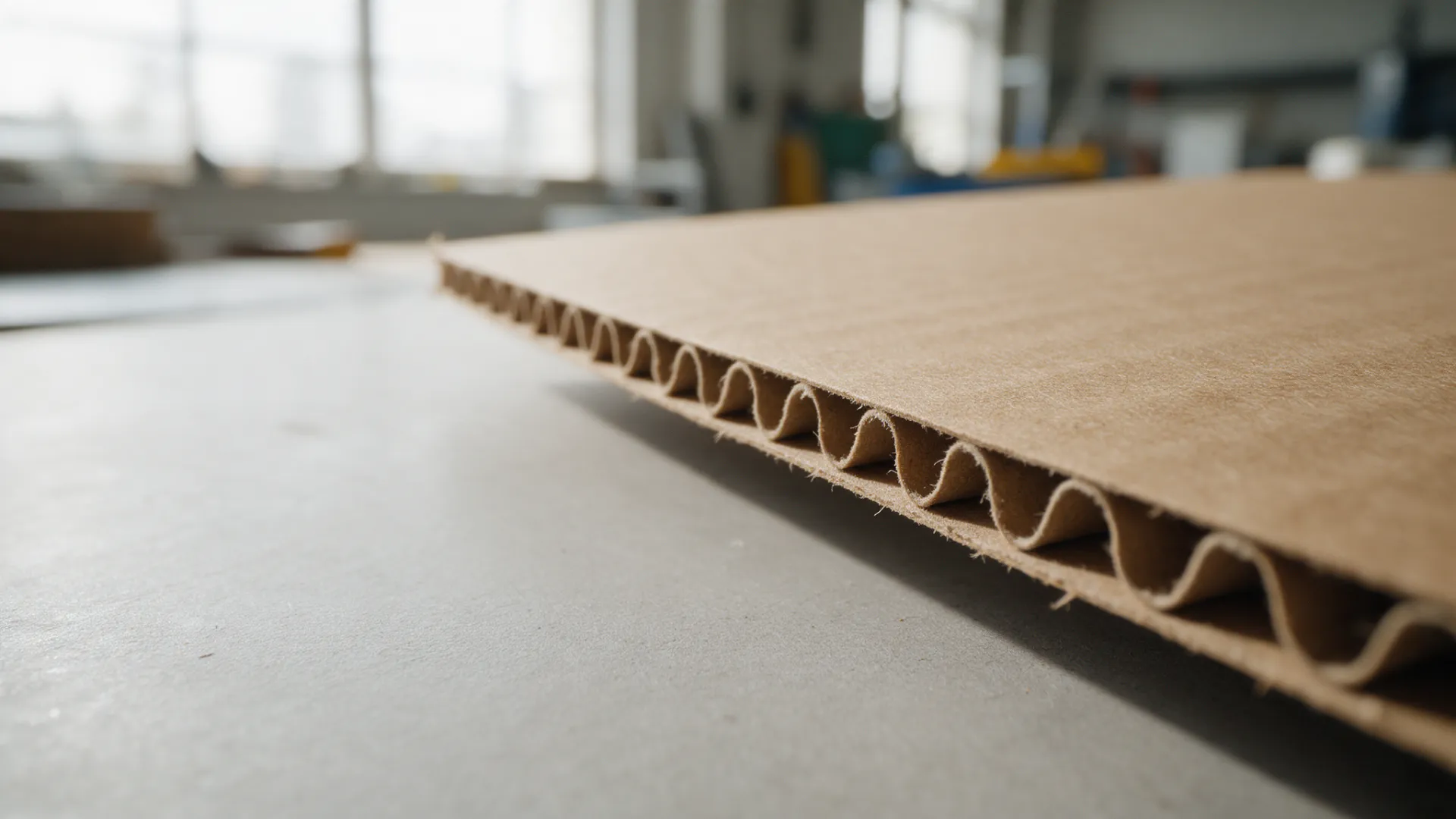
Corrugated board is a packaging material made by placing a wavy (fluted) layer between flat layers of paper. In its simplest form, it consists of three layers: two flat outer layers and the fluted layer between them. The flutes give the material high strength relative to its weight and the ability to absorb impacts.
A brief history
In the second half of the 19th century, corrugated paper was used first as a hat lining and then for wrapping fragile items; towards the end of the century, it was combined with flat layers and became a box material. In the 20th century, as industrial production became widespread, it became the main material for shipping packaging.
Types of corrugated board
Single wall: one fluted layer between two flat layers. For light and medium-weight products.
Double wall: two fluted layers. Higher strength for heavy or fragile products.
Triple wall: three fluted layers. For transporting large and heavy products.
Applications
Automotive: transport and storage of parts
Electronics: sensitive devices and components
E-commerce and retail: shipping and presentation packaging
Food and beverages: shipping boxes
Furniture and household goods: large and bulky products
Industry and manufacturing: industrial products and equipment
Corrugated board can be recycled in the paper waste stream; in this respect, it is also one of the key materials of sustainable packaging design.